An invoice and a receipt often list the same client, the same work and the same amount, so it is easy to assume they are interchangeable. They are not. The difference is timing: an invoice comes before payment, and a receipt comes after it.
Knowing which one you need, and when, keeps your records straight and avoids confusion with a client who asks "do you mean you already paid me, or you want me to pay you?"
What an invoice is
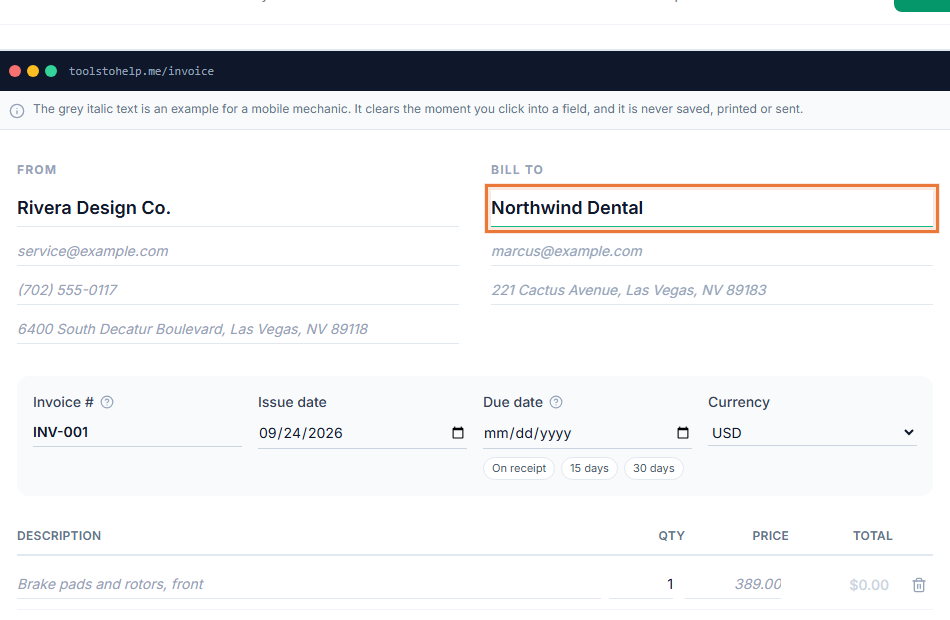
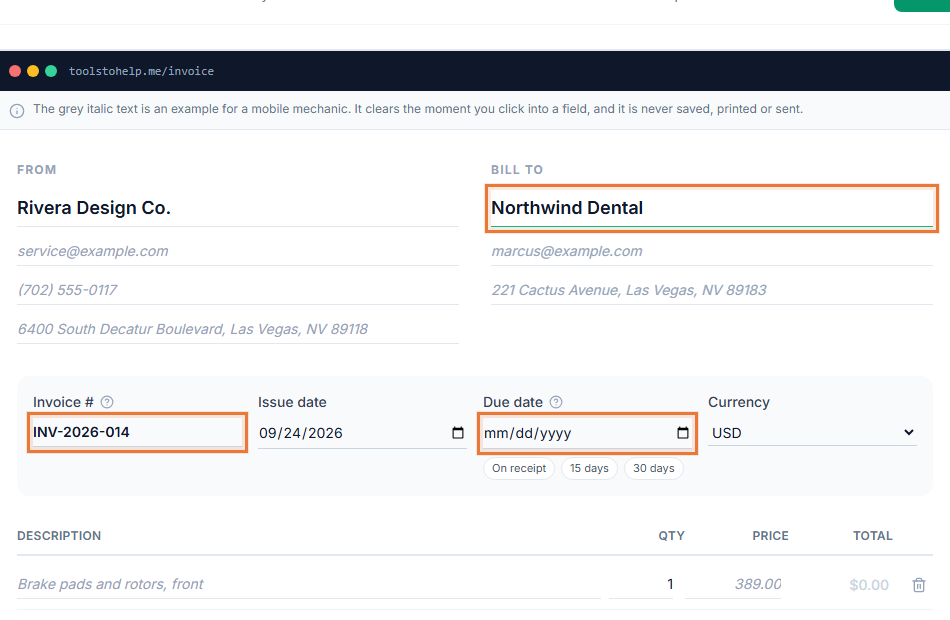
An invoice is a request for payment. You send it to a client after you have delivered work or agreed to deliver it, listing what you did, what it cost, and when you expect to be paid. It is dated with an issue date and a due date, and it usually carries a unique invoice number so both you and the client can refer back to it.
An invoice is not proof that you were paid. It is proof that you asked to be paid, and it sets the terms for when that should happen. See how to write an invoice for everything a complete one needs.
What a receipt is
A receipt is proof that a payment already happened. It shows the amount that was actually paid, the date it was paid, and often the payment method, such as card, bank transfer or cash. A receipt looks backward at a completed transaction, while an invoice looks forward to one that has not been settled yet.
Receipts are most familiar from retail, where you get one the moment you pay. In service businesses, a formal receipt is less common. Many freelancers and small businesses simply mark the invoice paid and treat that record as their receipt, which is enough for most purposes.
Invoice vs receipt: the key differences
| Invoice | Receipt | |
|---|---|---|
| When it is sent | Before payment | After payment |
| What it proves | An amount is owed | An amount was paid |
| Key dates | Issue date and due date | Payment date |
| Who typically sends it | The person doing the work | The person doing the work, or a payment processor |
| Used for | Requesting payment, chasing late payment | Bookkeeping, expense claims, warranty proof |
Do you need both for the same job
For most freelance and small business work, you do not need two separate documents. The usual flow is: send an invoice, the client pays it, and you update the same invoice to show it is paid, with the payment date. That paid invoice is your record.
A separate receipt makes more sense when you take payment at the time of service, such as an in-person appointment or a retail sale, where there was never an unpaid invoice waiting on the client. It also comes up when a client's expense process specifically asks for a receipt rather than a paid invoice.
Turning a paid invoice into your record
 Inside Invoice Generator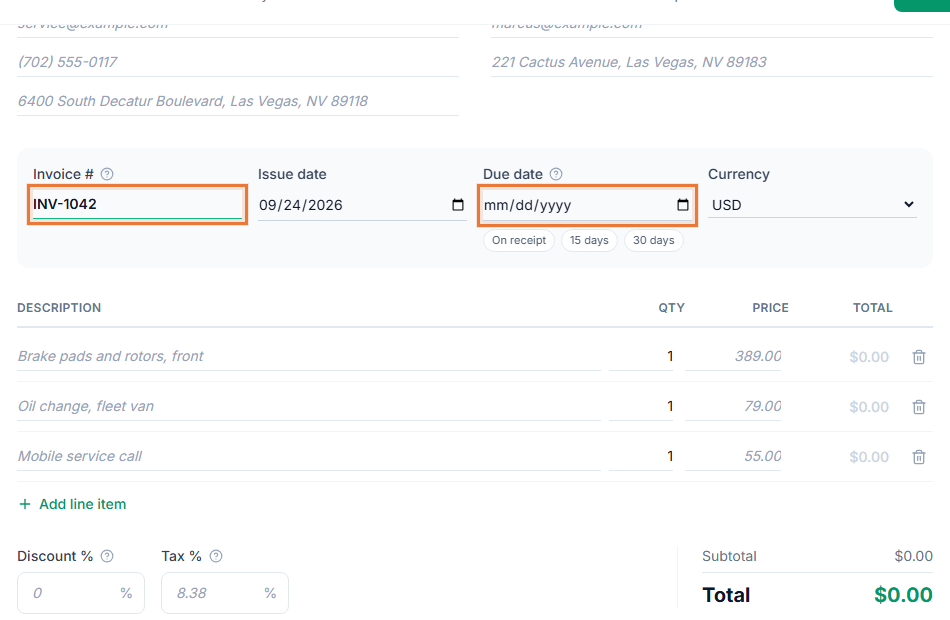
- Create the invoice. Open the Invoice Generator, add your details, your client's details and your line items.
- Save it with a free account. Saving the invoice and downloading it as a PDF both require a free account. Your work is kept while you sign up.
- Share the link. Each invoice has a link your client can open without an account, and you can see when they view it.
- Mark it paid once payment arrives. Update the invoice with the payment date so the record shows it is settled.
- Keep the saved, paid invoice as your record. It shows what was billed, when, and that it was paid, which covers what a receipt would otherwise show.
Which one should you send
If you have not been paid yet, send an invoice. If you have already been paid and someone needs proof, that is a receipt, and for most service work your paid invoice already covers it. When in doubt, ask what the other side actually needs: a bill to pay, or proof that one was already paid.