Estimates, quotes and invoices all list a piece of work and a number. That similarity is exactly why they get mixed up, but each one belongs at a different stage of a job, and confusing them can leave you and a client disagreeing about what was actually promised.
What an estimate is
An estimate is an approximate price for a job, sent before the work begins. It is useful when the full scope is not completely fixed yet, such as a repair where the extent of the problem is not clear until you start, or a project where the client may add or drop items. An estimate sets expectations, not a locked-in commitment.
What a quote is
A quote is generally treated as a firmer number than an estimate, closer to a fixed price for a defined scope of work. In practice, many businesses use "estimate" and "quote" to mean the same thing, and there is no single rule that everyone follows. If the distinction matters in your line of work or your local market, be explicit on the document itself about whether the price is fixed or approximate, rather than relying on which word is in the title.
What an invoice is
An invoice is a request for payment for work that has been done, or that the client has agreed to pay for under agreed terms. Unlike an estimate or a quote, an invoice is not proposing a price, it is billing for one, with an issue date, a due date and payment terms attached. See how to write an invoice for everything one needs.
Estimate, quote and invoice compared
| Estimate | Quote | Invoice | |
|---|---|---|---|
| Sent | Before work starts | Before work starts | During or after work |
| Price | Approximate, can change | Usually fixed | Final, due for payment |
| Purpose | Set expectations | Propose a firm price | Request payment |
| Typically needs | Client's agreement to proceed | Client's acceptance | Payment by the due date |
Which one to start with
If the scope of the job could still change once you see the site, the material or the client's final requirements, start with an estimate and say so plainly, so the client knows the number may move. If you already know exactly what the job involves and are comfortable committing to a fixed price, a quote skips a step and lets the client make a decision straight away.
Some jobs skip the estimate or quote stage entirely, particularly small, well-understood work where both sides already know roughly what it costs. In that case, going straight to an invoice after the work is done is reasonable. The extra step only earns its place when the price or scope genuinely needs to be confirmed first.
The usual path from one to the next
 Inside Invoice Generator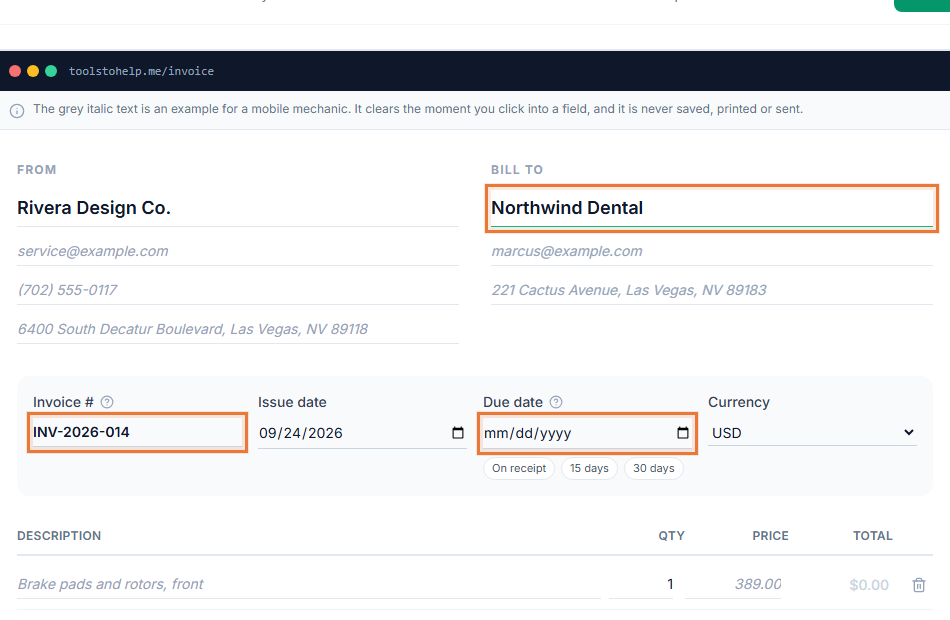
- Send an estimate or a quote. Describe the work and give the client a number to react to before anything starts.
- Get agreement. A signature, a reply confirming the price, or a deposit payment all count as confirmation to proceed.
- Do the work. If the scope changes partway through, update the client and, if the price changes materially, say so before you finish rather than as a surprise on the invoice.
- Send the invoice. Carry over the agreed line items and price, now with an issue date, a due date and your payment terms.
Doing this in the Invoice Generator
The Invoice Generator supports estimates as well as invoices, so you can send one before work begins and turn it into an invoice once it is done. A saved estimate has a link your client can open in their browser to review and sign, without needing an account of their own, and you can see once they have viewed it.
When it is time to bill, use the same line items from the estimate as the starting point for your invoice, adjusting only what actually changed during the job.
Keeping the wording clear on the document
Whichever word you use in the title, the document itself should be clear about what the client is agreeing to. If the price could still change, say so directly, such as "estimate, subject to final scope" or "prices may change if additional work is requested." If the price is fixed, say that too. The label at the top matters less than what the document actually promises.