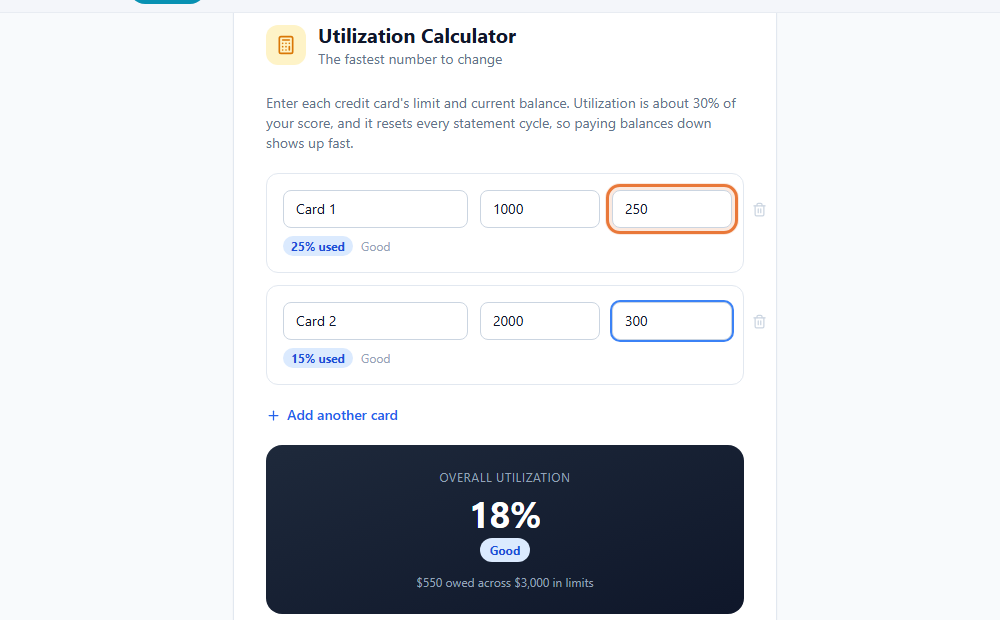
Credit scores are calculated from credit report information. Payment history, card balances relative to limits, credit age, and applications can matter, but models weigh them differently. The CFPB recommends on-time payments and low card balances as durable habits.
Why one number is not the whole story
A lender can use a different score model or bureau report from the one you see in an app. Updates also arrive at different times. A simulation is useful for learning cause and effect, but it cannot promise how many points a real event will add or subtract.
Explore examples in the simulator
 Inside Credit Building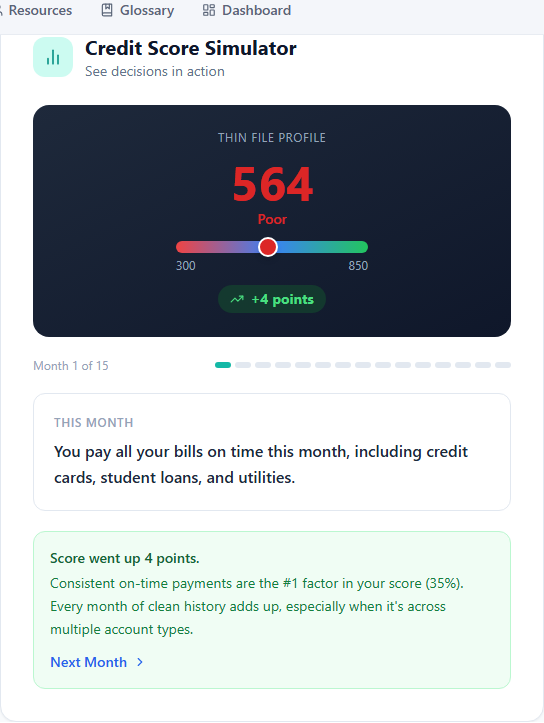
- Open the Credit Score Simulator. Choose a sample starting profile such as a thin file, rebuilding file, or established history.
- Read the first event. It describes a possible change to that person's credit report or behavior.
- Reveal the explanation. Select “How does this affect the score?” and read why the simulated number moves.
- Continue through the scenarios. Notice how the same kind of event can land differently when the starting profile changes.
- Return to your own report. Check for factual errors and focus on habits you can sustain rather than trying to match a sample point change.
Use the lesson, not the estimated points
The simulator's numbers are educational examples. For your own situation, start with your reports, pay on time, and keep card balances within your budget. The CFPB explains what a credit score is and why scores can vary.
This guide is general education, not legal or financial advice. CreditPath and ToolsToHelp.Me do not promise any change to your credit report or score. For advice about your situation, talk to a qualified professional, such as a nonprofit credit counselor or an attorney.