A credit history grows when lenders report an account and how you pay it. A secured card or credit-builder loan may help you start, but the right first move depends on your cash, existing accounts, and eligibility. The Consumer Financial Protection Bureau explains these common starting options.
Check your starting point
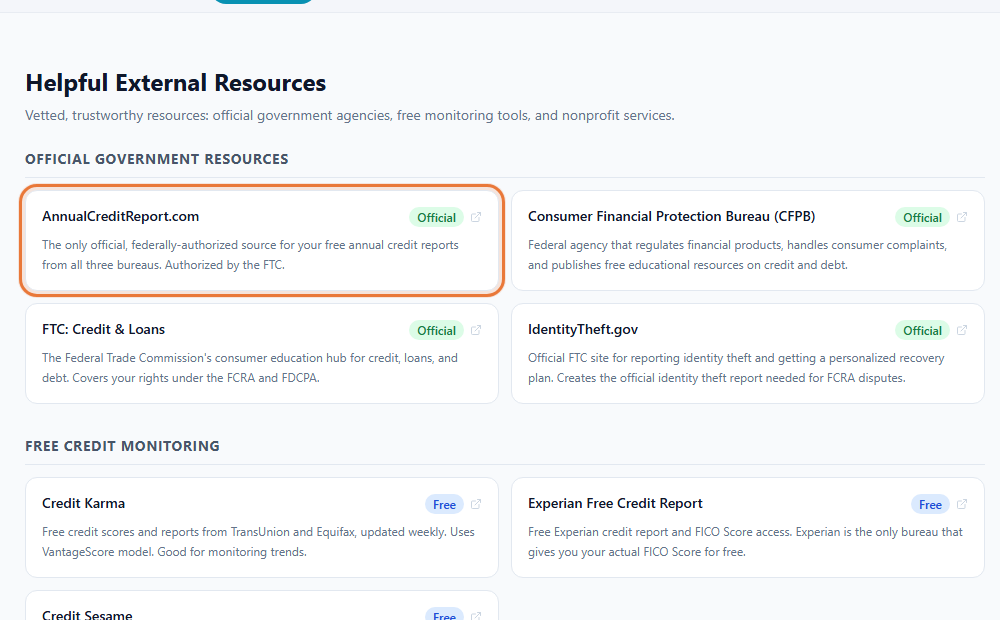
Get your free reports first so you know whether you truly have no file or have an older account or error to address. Set a monthly amount you can reliably pay. Do not apply for several accounts at once just to see which one approves you.
Compare the main first steps
- Secured credit card: You provide a refundable deposit that usually helps set the credit limit. Check all fees, reporting, and how you may graduate to an unsecured card.
- Credit-builder loan: A bank or credit union may hold the loan amount while you make payments, then release it under the product terms. Compare interest and fees.
- Authorized user: A trusted person may add you to an existing card. The effect depends on the issuer's reporting and the primary holder's account behavior; you are relying on that relationship.
Use the Starter Path Picker
 Inside Credit Building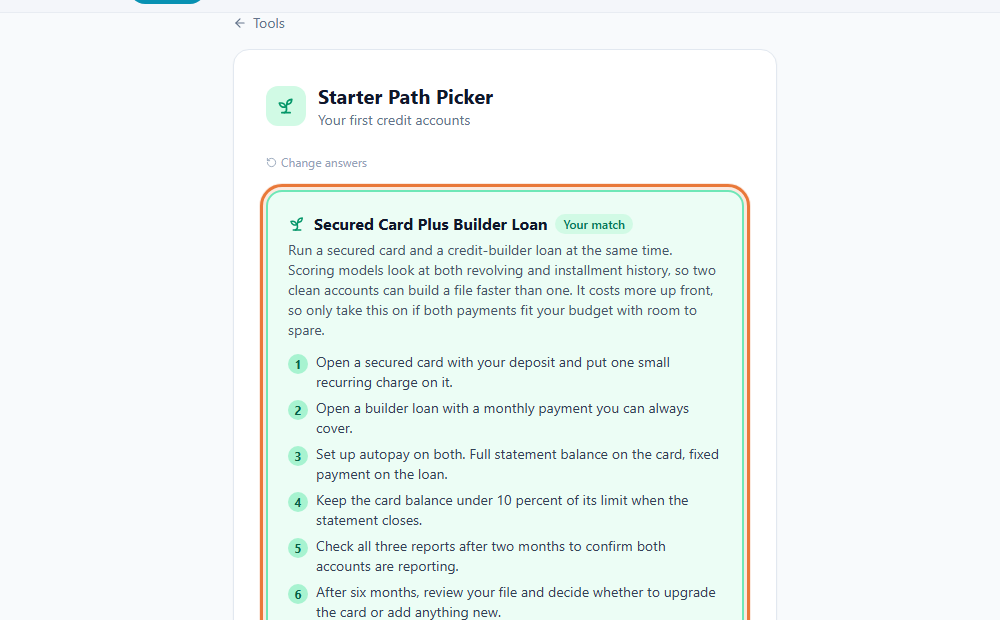
- Open the Starter Path Picker. It asks about a possible deposit, a trusted authorized-user option, identity documents, and a bank account.
- Answer for your real situation. The tool presents an educational path and its steps. It does not apply for a product.
- Compare terms yourself. For any account you consider, confirm reporting, total fees, deposit rules, and payment due dates with the provider.
- Choose only what you can manage. The picker may suggest more than one account, but you can begin with one. Keep card balances low and pay on time. Review your reports later to see what was actually reported.
The habits matter more than the product name
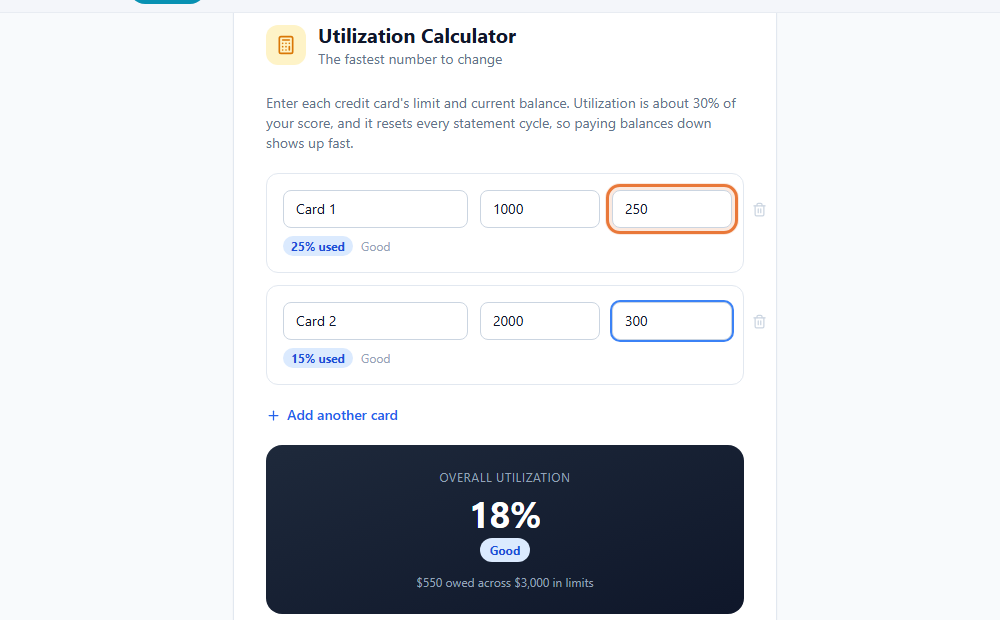
The CFPB emphasizes paying on time and keeping card balances low. A card is not helping if fees or interest make it hard to keep up. Set reminders or automatic payments you can fund, and review statements for mistakes.
This guide is general education, not legal or financial advice. CreditPath and ToolsToHelp.Me do not promise any change to your credit report or score. For advice about your situation, talk to a qualified professional, such as a nonprofit credit counselor or an attorney.