A deposit is money paid before you start work, rather than after you finish it. It exists for two reasons: it protects you if a job falls through partway in, and it confirms that a client is actually ready to commit, not just gathering quotes.
How much to ask for
There is no fixed rule, but a few patterns are common:
- 30 to 50% for larger jobs. The most common range for projects that run over a few weeks or involve significant upfront time or materials.
- 10 to 20% to confirm commitment. A smaller deposit used mainly to filter out clients who are not serious, on jobs where cancellation risk is lower.
- 100% upfront for small jobs. Common for short, low-cost work where chasing a balance afterward is not worth the effort for either side.
Match the size of the deposit to the size of the job and to how much risk you are carrying if the client cancels or disappears after you start.
When to ask for one
A deposit fits naturally in a few situations: a new client you have not worked with before, a job large enough that a cancellation partway through would genuinely hurt, or work with real upfront costs such as materials or subcontractors you have to pay regardless of whether the client ultimately pays you. For small, quick jobs with an established client, billing the full amount on completion is often simpler for both sides.
Wording for a deposit request
State the deposit clearly on the estimate or the deposit invoice itself, before work begins, not as a separate conversation the client has to remember:
- "A deposit of [amount or percentage] is due before work begins. The remaining balance is due on completion."
- "This estimate requires a 40% deposit to confirm the project. Work begins once the deposit is received."
- "Deposits are non-refundable once materials have been ordered." (Only if this reflects your actual policy.)
Being upfront about the amount and the condition avoids a disagreement later about what was actually agreed.
Creating a deposit invoice
 Inside Invoice Generator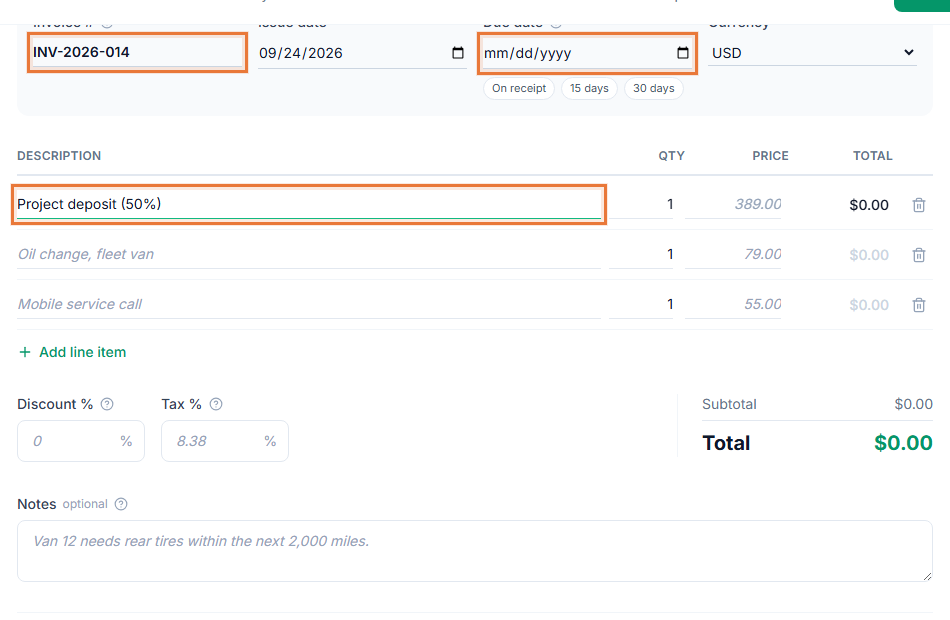
- Open the Invoice Generator at toolstohelp.me/invoice/ and start a new invoice or estimate for the job.
- Add a line for the deposit. Describe it clearly, such as "Deposit, 40% of project total," with the deposit amount.
- State the terms in your notes. Note that this is a deposit toward the full project, and when the balance will be invoiced.
- Save and send it. Create a free account to save the invoice and share its link, or download the PDF.
Showing the deposit on the final invoice
Once the job is finished, invoice for the full amount as if the deposit had not been paid, then subtract it as its own line so the client can see exactly what is left to pay:
| Amount | |
|---|---|
| Subtotal (full project) | $2,125.00 |
| Deposit received | -$500.00 |
| Balance due | $1,625.00 |
Showing the deposit as a separate negative line, rather than just billing the smaller remaining amount with no explanation, keeps the full project value visible and makes the math easy for the client to check against what they already paid.
If the job is cancelled after a deposit
Whether a deposit is refundable, and how much of it, depends entirely on what you stated before the client paid it. If you have not set a policy yet, decide on one and put it in writing on your estimate template going forward, so the next cancellation is not a negotiation from scratch.
Asking for a deposit on an estimate
If you send an estimate before the deposit conversation, state the deposit requirement directly on the estimate itself rather than as a follow-up message. A client who signs or approves an estimate that already says "40% deposit due to begin" has agreed to the term along with the price, which avoids a separate negotiation once they are ready to move forward. See estimate vs quote vs invoice for how an estimate and an invoice fit together on the same job.