An unpaid invoice is stressful, but most of them are not a dispute. They are a due date that quietly slipped past someone in accounts payable, or an invoice that landed in a spam folder. A calm, predictable follow-up process resolves the majority of them without any conflict.
This guide is general information based on common practice, not legal advice. Rules on late fees and collections vary by location, so check what applies where you and your client are based.
A reminder schedule that works
Sending reminders on a set schedule, rather than reacting emotionally each time, keeps the tone professional and makes it easy to know what to do next.
- A few days before the due date. A brief, friendly note restating the amount and the due date. This is not a chase, just a heads-up.
- On the due date. A short reminder that payment is due today, with the invoice link and amount included again.
- 3 to 5 business days after the due date. A firmer but still polite follow-up, noting that the due date has passed and asking when you can expect payment.
- 10 to 14 days after the due date. A direct message, and consider a phone call at this point, especially for a larger amount.
- Beyond that. Decide whether to pause further work, apply a late fee if you have one in place, or consider the next steps below.
Sample wording for each stage
Before the due date: "Hi [name], just a quick heads-up that invoice [number] for [amount] is due on [date]. Let me know if you need anything from me to process it. Thanks."
On the due date: "Hi [name], invoice [number] for [amount] is due today. Here is the link again: [link]. Let me know if you have any questions."
After the due date: "Hi [name], I wanted to follow up on invoice [number] for [amount], which was due on [date]. Could you let me know when I can expect payment? Happy to resend the invoice or answer any questions."
Well past the due date: "Hi [name], invoice [number] for [amount] is now [X] days past due. I have not received a response to my last two messages. Please let me know today when this will be paid, or if there is an issue I should know about."
When to call instead of emailing
A phone call is worth making once two written reminders have gone unanswered, or the amount is large enough that a delay meaningfully affects you. A call surfaces the real reason faster: a lost invoice, an internal approval stuck with someone else, or a genuine cash flow problem on their end. Keep the call short and factual: confirm the amount, ask when it will be paid, and follow up afterward in writing to record what was agreed.
Late fees, if you have them in place
You can only charge a late fee if you stated it, including the amount or rate, on the original invoice or in your agreement before the due date passed. Adding one afterward as a surprise generally is not enforceable and tends to damage the relationship more than it helps. See invoice payment terms explained for how late fees are usually structured and worded on an invoice.
Pausing further work
If a client has an overdue balance and is not responding to reminders, pausing any new work until the outstanding invoice is paid is a reasonable and common step, particularly for ongoing or project-based relationships. State it plainly rather than letting deadlines quietly slip: "I am pausing further work on this until invoice [number] is settled. Happy to pick back up as soon as it is paid." This protects you from doing more unpaid work for a client who has already fallen behind.
Small claims court, as a last resort
If reminders, a phone call and pausing work have not resolved it, small claims court is an option for recovering a specific unpaid amount without hiring a lawyer. The process, cost and dollar limits vary by location, so check the rules where your client is based before filing. Keep your invoice, your reminder emails and any written agreement, since these form the basis of your case. This is general information, not legal advice, and a qualified professional can advise on your specific situation.
Reducing this risk on future invoices
 Inside Invoice Generator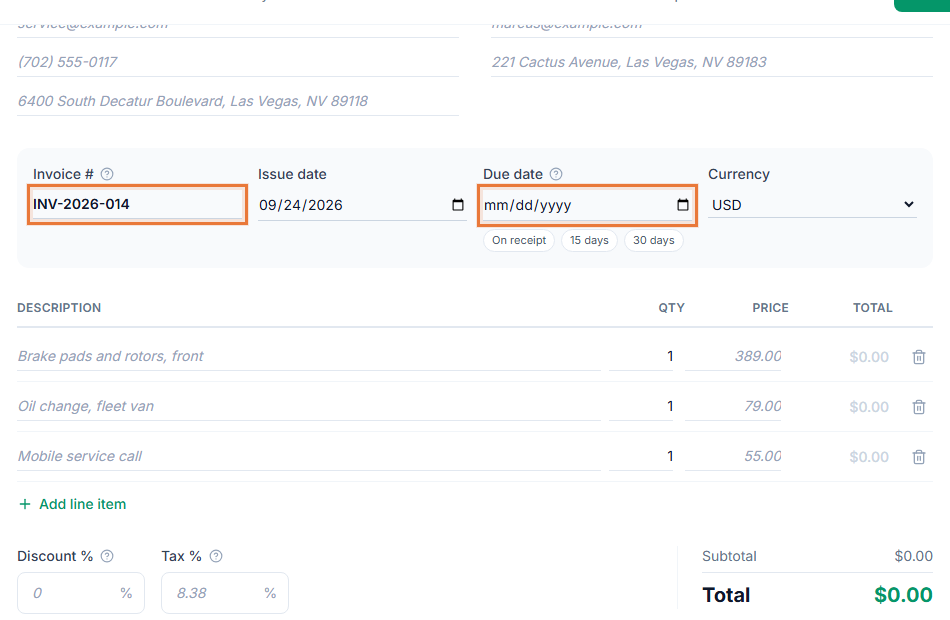
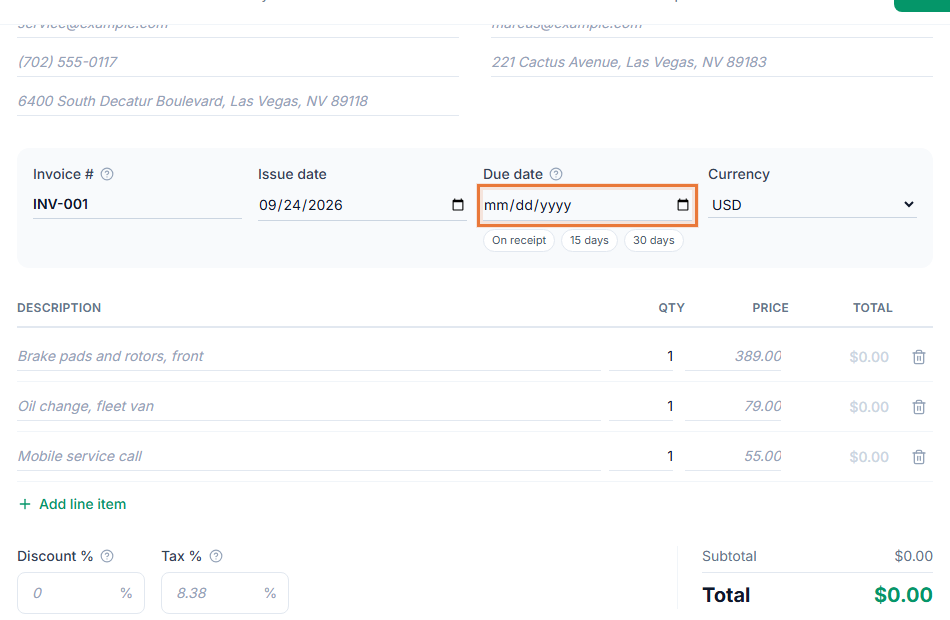
- Set clear payment terms up front. State the due date and, if you use one, your late fee policy on the invoice itself. See invoice payment terms explained.
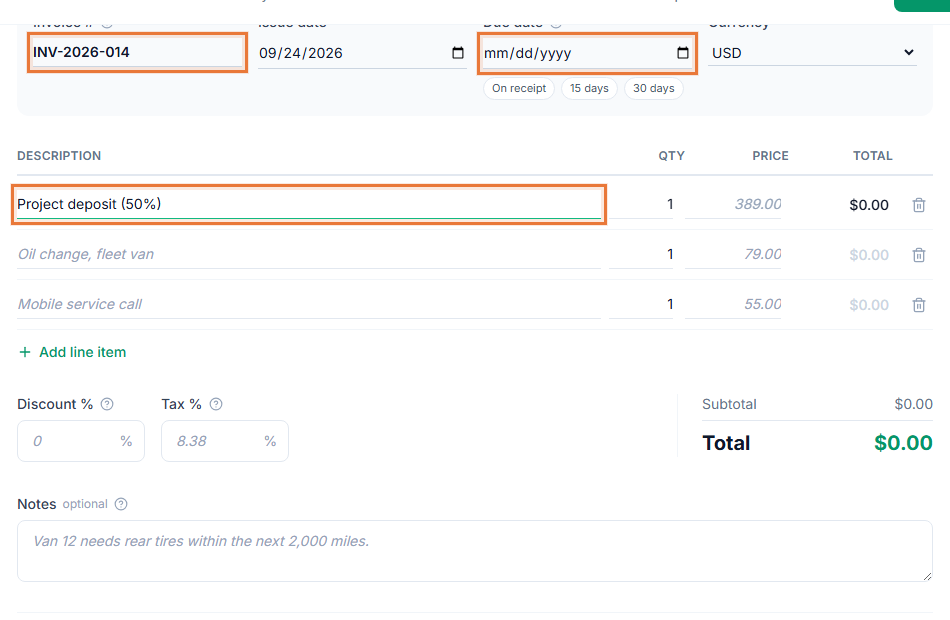
- Ask for a deposit on larger jobs. A deposit before work starts limits how much is ever at risk if a client turns out to be slow to pay. See how to ask for a deposit.
- Send the invoice promptly. A delay on your end can push back when a client's own approval process even starts.
- Check whether the invoice was viewed. A saved invoice's link shows you when your client has opened it, which tells you whether a reminder is really needed or the invoice simply has not been seen yet.